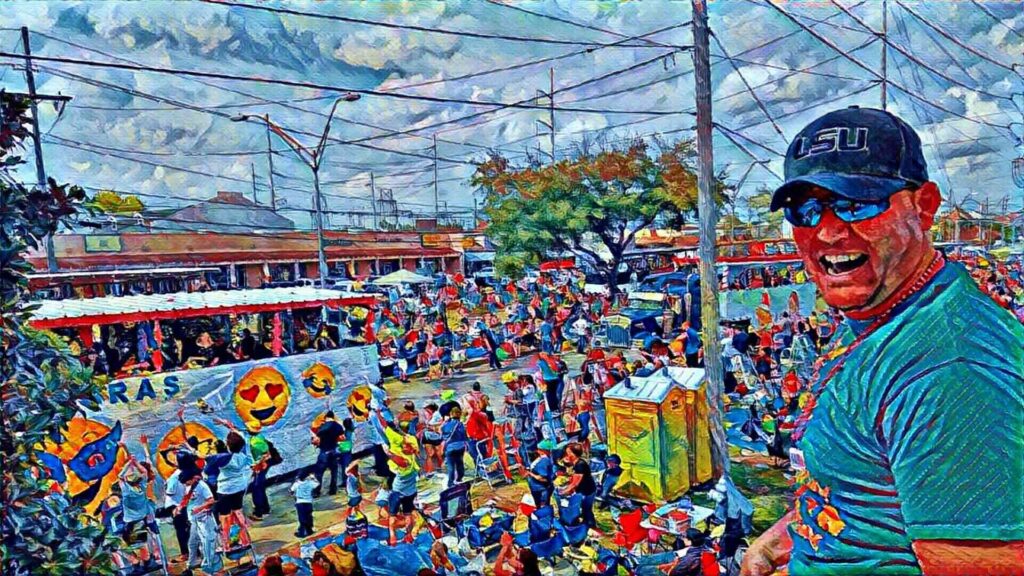
Mardi Gras has a sound long before it has a look.
You hear it before you see it. That first unmistakable trumpet blast of “Second Line” cutting through the humidity. Bass drums pulling you toward the corner. A rhythm that doesn’t ask permission. One note in the air and whatever you were doing five seconds ago no longer matters.
That sound is how New Orleans communicates. It carries memory. It carries movement. It tells you exactly where you are without having to explain itself.
That idea sparked a question we couldn’t shake. Can modern tools capture the sound of Mardi Gras without flattening it, polishing it, or turning it into something it isn’t?
This post is about a creative experiment we ran to explore that.
In this post:
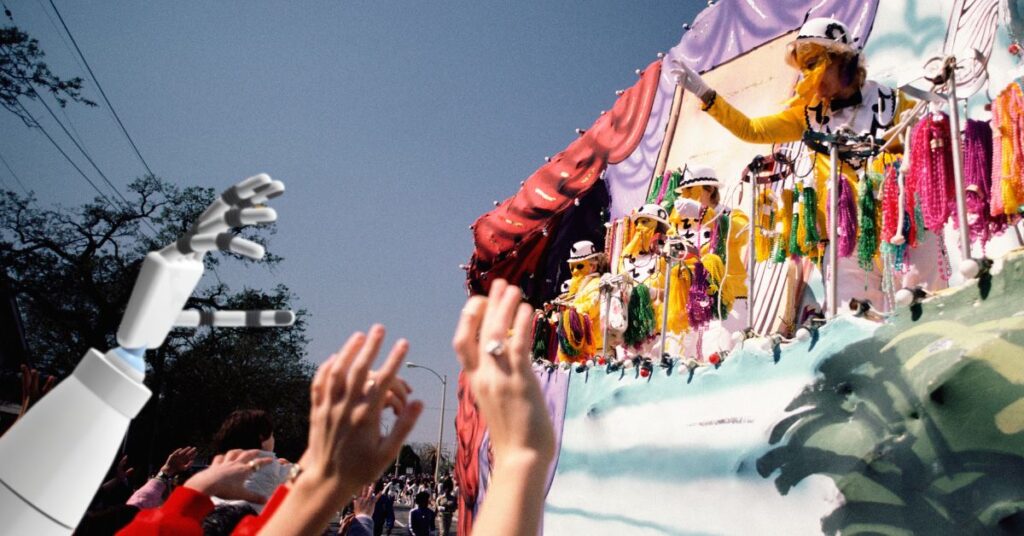
Why this started
This didn’t come out of nowhere.
We spend a lot of time talking with clients about how to capture the soul of New Orleans without falling back on the same familiar visuals, buzzwords, or shortcuts. Everyone knows what the city looks like. Describing how it feels is a lot harder.
This question comes up a lot in our work. It’s something we’ve spent time thinking about before, especially when we asked what it might look like if more businesses actually operated with a New Orleans mindset instead of just borrowing the aesthetic.
Music kept coming up in those conversations. Not as a product, but as a reference point. It’s a way to talk about energy and rhythm when visuals aren’t quite getting there. So instead of continuing to talk about it, we made something people could actually hear.
What this experiment was (and what it wasn’t)
Let’s be clear.
This wasn’t about making AI music. It wasn’t about replacing musicians.
It was a stress test, testing whether modern tools could work under real creative constraints. We treated AI like a junior creative in the room. It got strict direction, it got boundaries, and it got edited heavily.
In other words, it wasn’t leading. It was listening. Could it capture that familiar sound of Mardi Gras?
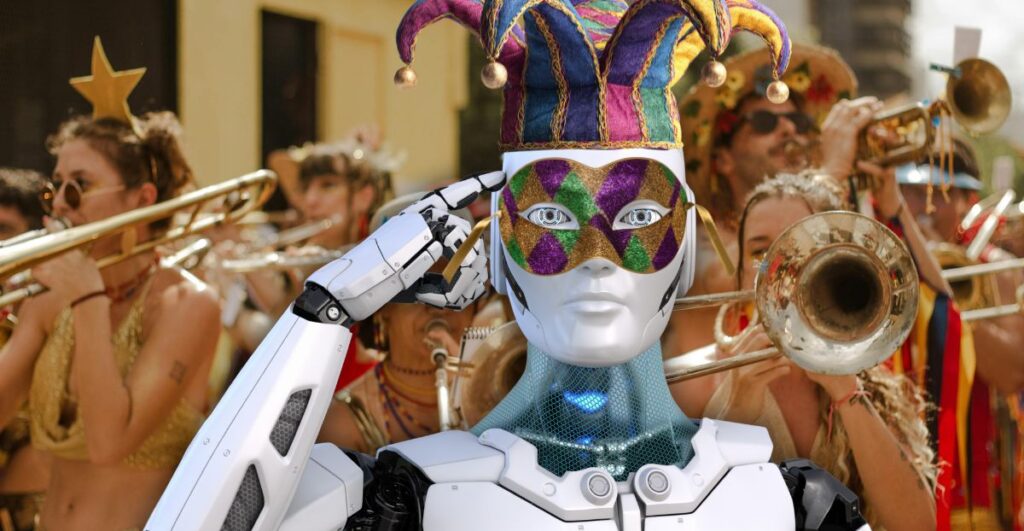
The ground rules
To keep the experiment honest, we set a few non negotiables.
- No studio gloss. If it sounded too produced, it was out.
- No hype vocals. No filler meant to force a big moment.
- Let the songs end when they need to. We didn’t force a target length.
- Brass leads. Vocals support the groove, never the other way around.
- Feeling comes first. If it didn’t make you want to move, it wasn’t right.
- Keep the rough edges. We didn’t smooth out the parts that felt raw.
We weren’t chasing novelty. We were chasing the kind of feeling you don’t have to explain.
The result
The experiment resulted in three tracks:
- Meet Me on the Street
- Sweet Orleans
- (Mama Said) Follow the Horns
These aren’t products. They’re artifacts. They’re examples of what happens when powerful tools are guided by taste, restraint, and a real understanding of the culture.
You’ll hear the horns first. You’ll feel the movement before the lyrics. And you’ll probably notice what’s not there, too. That was intentional.
Download the songs
A note on the real deal
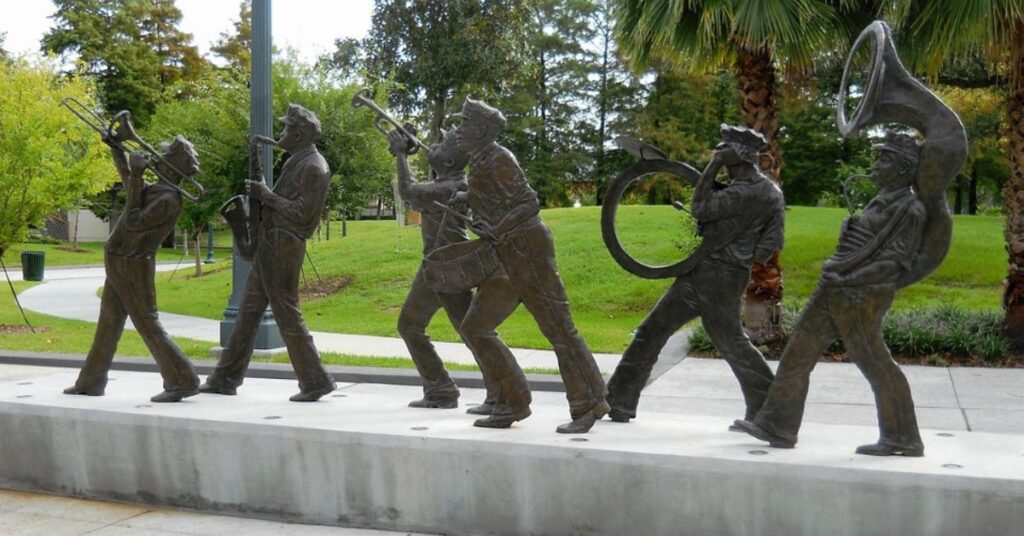
This wasn’t an attempt to bypass people. We live here. We work here. We support local bands and work alongside the artists who make this city move.
Music is personal for us. Our Creative Director, Shaun, grew up around it, including watching his dad, longtime local radio personality Bob Walker, spend decades on the air keeping hits from the 1950s, ’60s, and ’70s alive, and still does with Yat Radio. That included the classic Mardi Gras songs that signal the season as much as any parade. Bob knew the musicians behind the records and used his platform to help local artists reach more people. That legacy matters to us.
We believe new tools should expand what’s possible, not replace the people who created the culture in the first place.
What this taught us
The biggest takeaway wasn’t technical. It was simple. Anyone can generate. AI makes it super simple these days. But not everyone can judge.
AI is powerful, but undirected AI is generic “slop.” The value isn’t in the prompt. It’s in knowing what to cut, when to stop, and what doesn’t belong. The tools didn’t replace judgment. They demanded more of it.
Why this matters for your brand
This same logic applies to branding, strategy, and storytelling.
AI can speed up the process, but only if it’s steered by people who actually understand the audience and the culture. Without that, everything starts to sound the same, like a digital copy of a copy. We don’t use tools just because they exist. We use them when they help tell a better story.
The work that actually sticks usually comes from a real understanding of place and audience. We’ve seen that play out again and again in some of the most memorable advertising to come out of New Orleans.
Supporting the music that makes this city sound like itself
This experiment only exists because generations of real musicians, teachers, and mentors do the work every day. If this project resonated with you, consider supporting the organizations that keep the music alive year-round.
Musicians’ Village
Supporting musicians and their families through housing, stability, and long-term investment in the community.
The Roots of Music
Using music education, discipline, and performance to positively impact the lives of young people in New Orleans.
Trombone Shorty Foundation
Empowering the next generation of New Orleans musicians through education, mentorship, and performance opportunities.
New Orleans Music Education Collaborative
Strengthening and connecting music education programs across the city so more students have access to learning and instruments.
Preservation Hall Foundation
Preserving New Orleans’ musical legacy while supporting musicians, archives, and tradition.
This started as a question, not a deliverable. We used AI where it made sense and ignored it where it didn’t. Everything else came down to listening closely and making thoughtful choices, not forcing the tools to do more than they should. What do you think? Did it capture the sound of Mardi Gras?